Projects & Research
- Publications and patents
- 117+
- Open datasets
- 2
- Software tools
- 9+
Ultrasound Systems
Transducers, acoustic masks, front-end electronics and simulation tools for ultrasound acquisition.
Ultrasound Front End
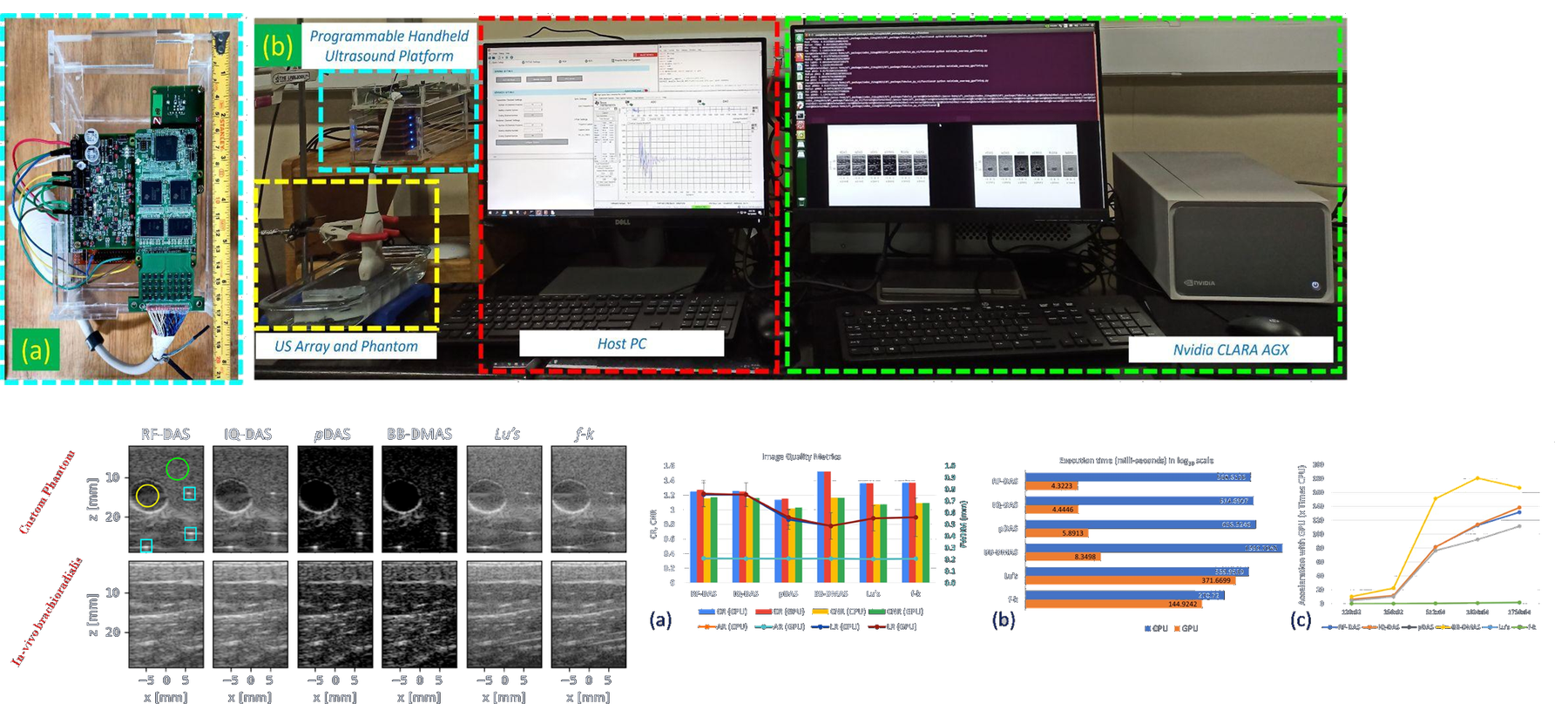
PublishedReceive chain and beamforming hardware for portable ultrasound, i.e., analog front end, FPGA beamforming cores and GPU pipelines. Our group has proposed a pixel-level reconfigurable digital beamforming core (IEEE TBCAS) and FPGA accelerators for adaptive and capsule network based beamformers (IEEE TVLSI, IEEE Access).
View project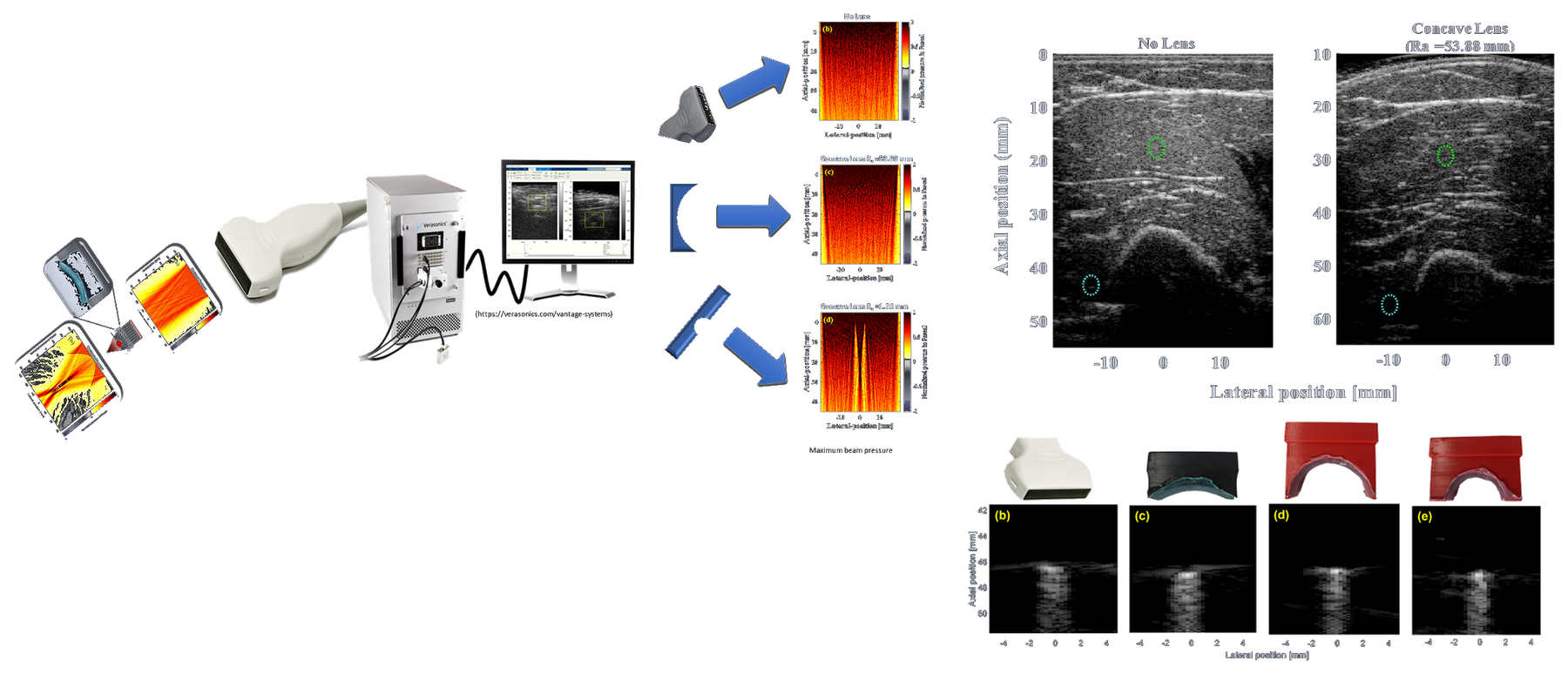
3D-Printed Acoustic Masks
OngoingA concave shell printed in PLA and filled with a non-Newtonian gel is clipped onto a flat linear array, which focuses the transmit without reducing the frame rate. With the non-Newtonian fluid lens, lateral resolution improved by 47.31% and intensity by 44.57% (Biomedical Engineering Advances 2025).
View project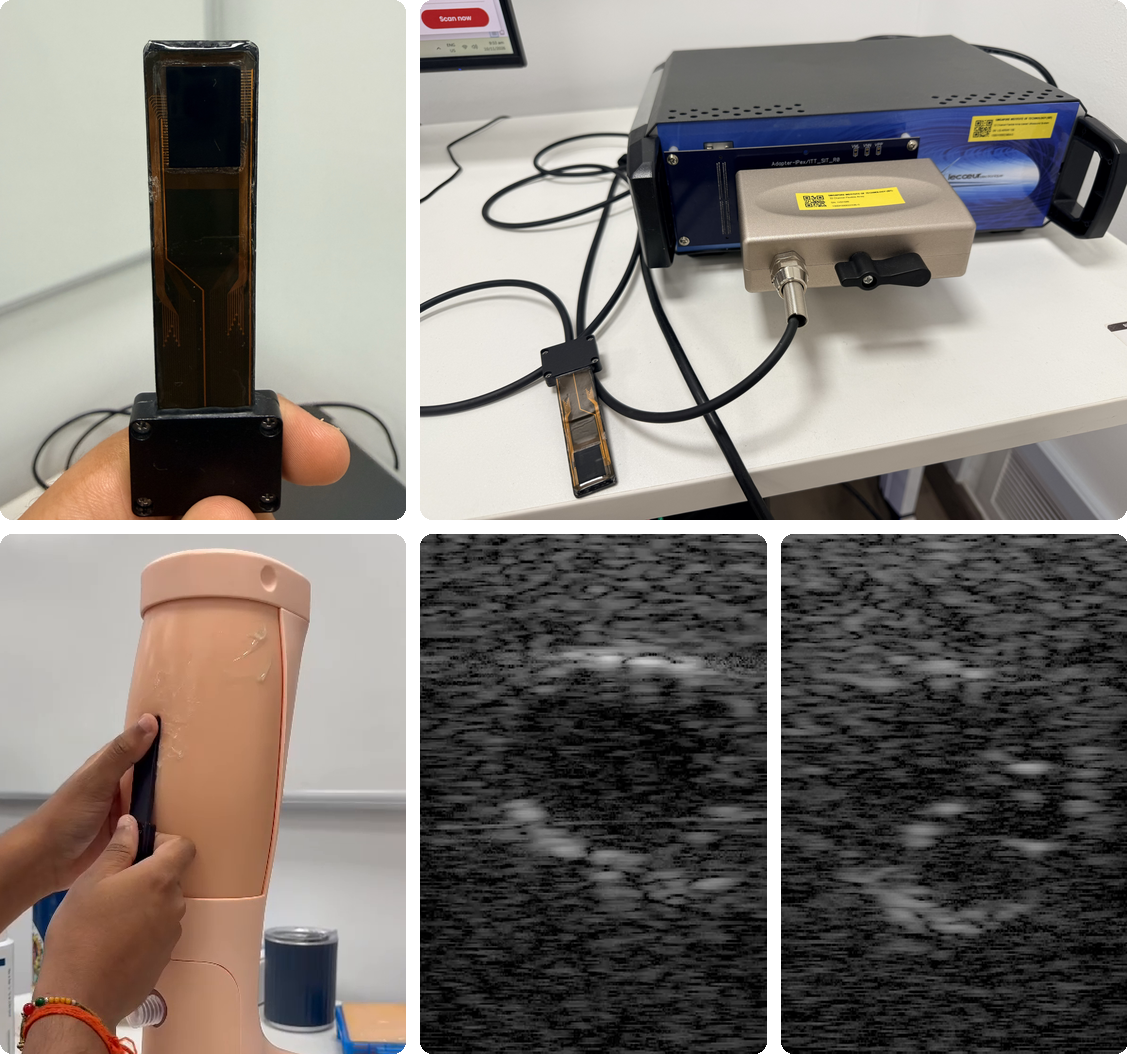
Flexible Transducer Arrays
OngoingWhen a flexible array bends, delay and sum no longer knows where the elements are. The probe surface is approximated by a cubic and adaptive probe geometry estimation recovers the curvature for high frame rate imaging, with the training data simulated in SIMUS.
View project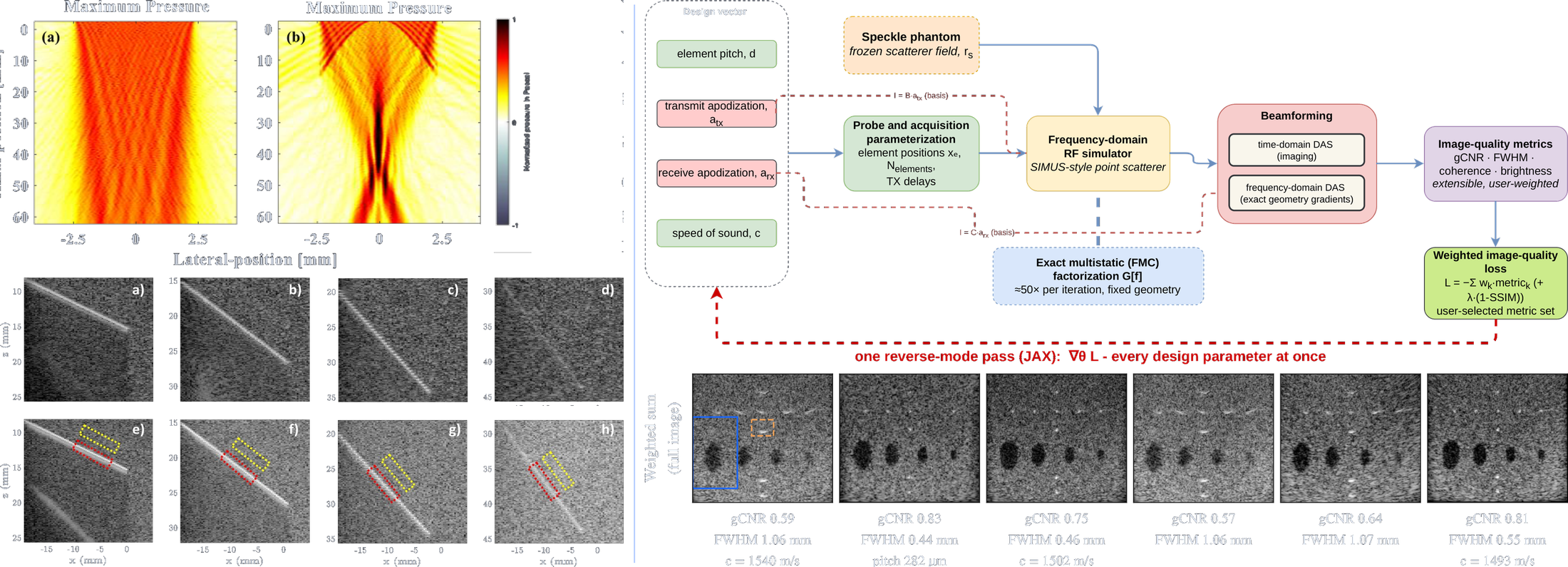
Ultrasound Simulations
OngoingSimulation is used across our projects, i.e., k-Wave models of lens beam patterns, needle insertions, lung pathologies and underwater targets, together with the open-source UltraSim tools for Field II, k-Wave and SIMUS. Our group has also developed a differentiable ultrasound simulator in JAX, where one reverse-mode pass gives the gradient of an image-quality loss with respect to the element pitch, transmit and receive apodization and speed of sound, so that the probe geometry and the acquisition can be designed together (arXiv 2026, with a live demo at pulseecho.in/demos/diffUS).
View projectSignal & Image Processing
Beamforming, aberration correction, 3D and panoramic reconstruction, flow imaging and array processing, from simulation to real-time implementation.
Neural Beamforming
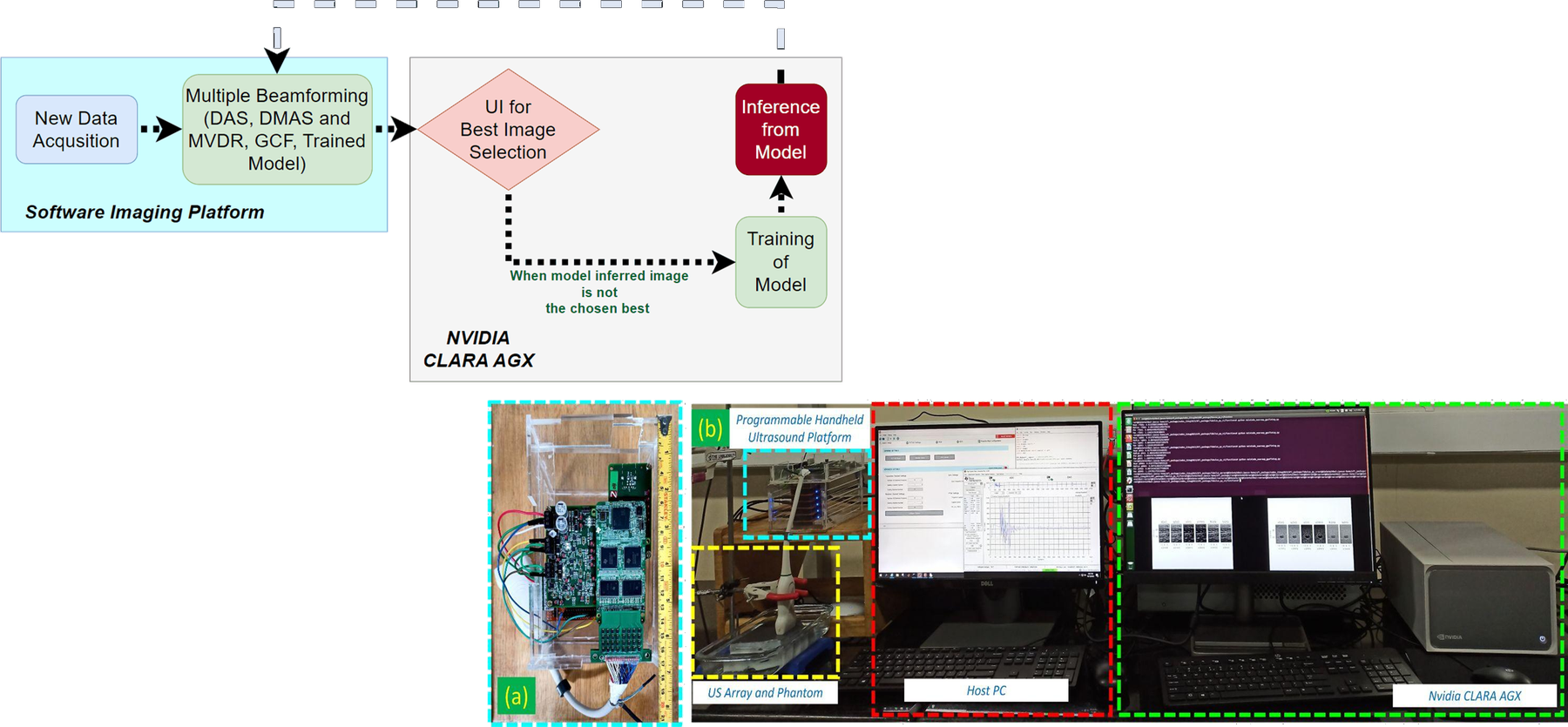
OngoingNeural networks are trained to reproduce adaptive beamforming, e.g., minimum variance, in a single forward pass. In the active learning framework (MLMIR at MICCAI 2022), the user selects the preferred beamformer during the scan and the network is trained while acquisition continues, at about 0.5 s per training iteration. Later work includes ADAPT, a multibeamformer with tunable weight fusion (IEEE ISBI 2026), and TGC-net for automatic time gain compensation, developed with Samsung R&D Institute India-Bangalore. In PIVOT, the receive apodization is conditioned on the imaging objective, so that one network moves between resolution and contrast from a single plane wave (arXiv 2026, with a live demo at pulseecho.in/demos).
View project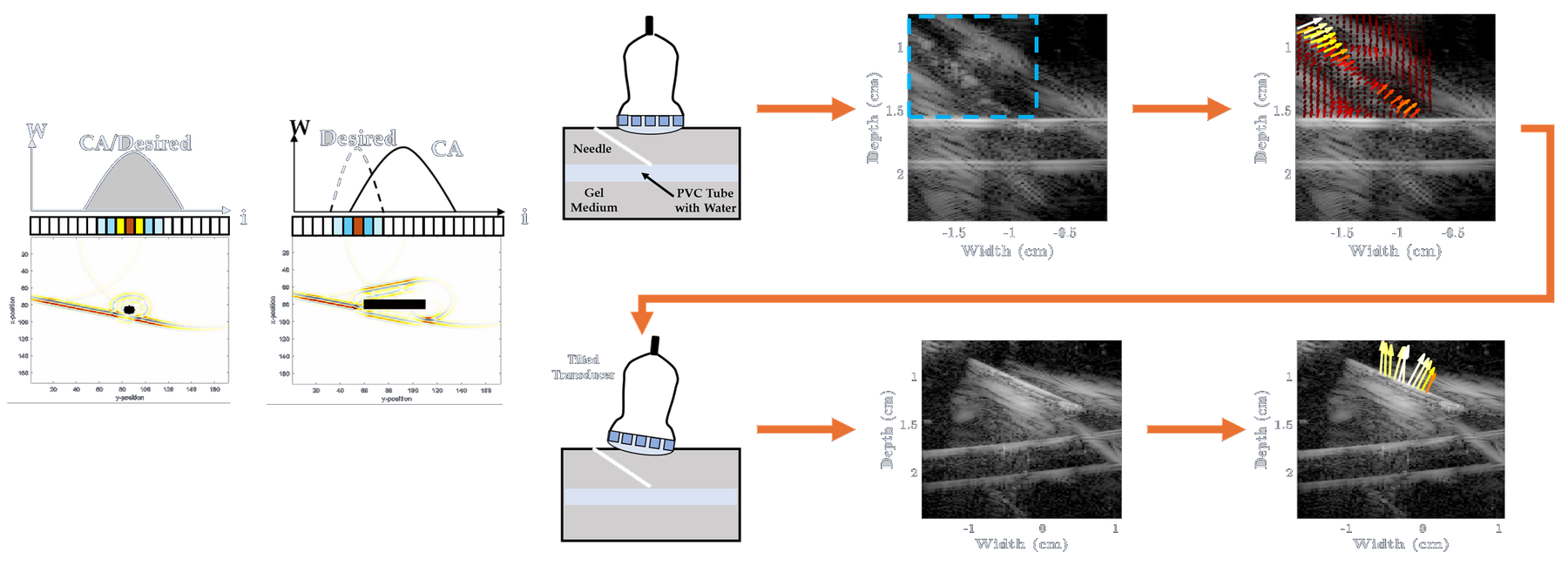
Structural Beamforming
PublishedDelay and sum assumes every echo is a diffuse reflection, whereas needles, bone and tissue interfaces are specular. Our group detects specular reflections per pixel and retunes the aperture, e.g., reflection tuned apodization (IEEE TUFFC) and transmit-steered directivity indexing.
View project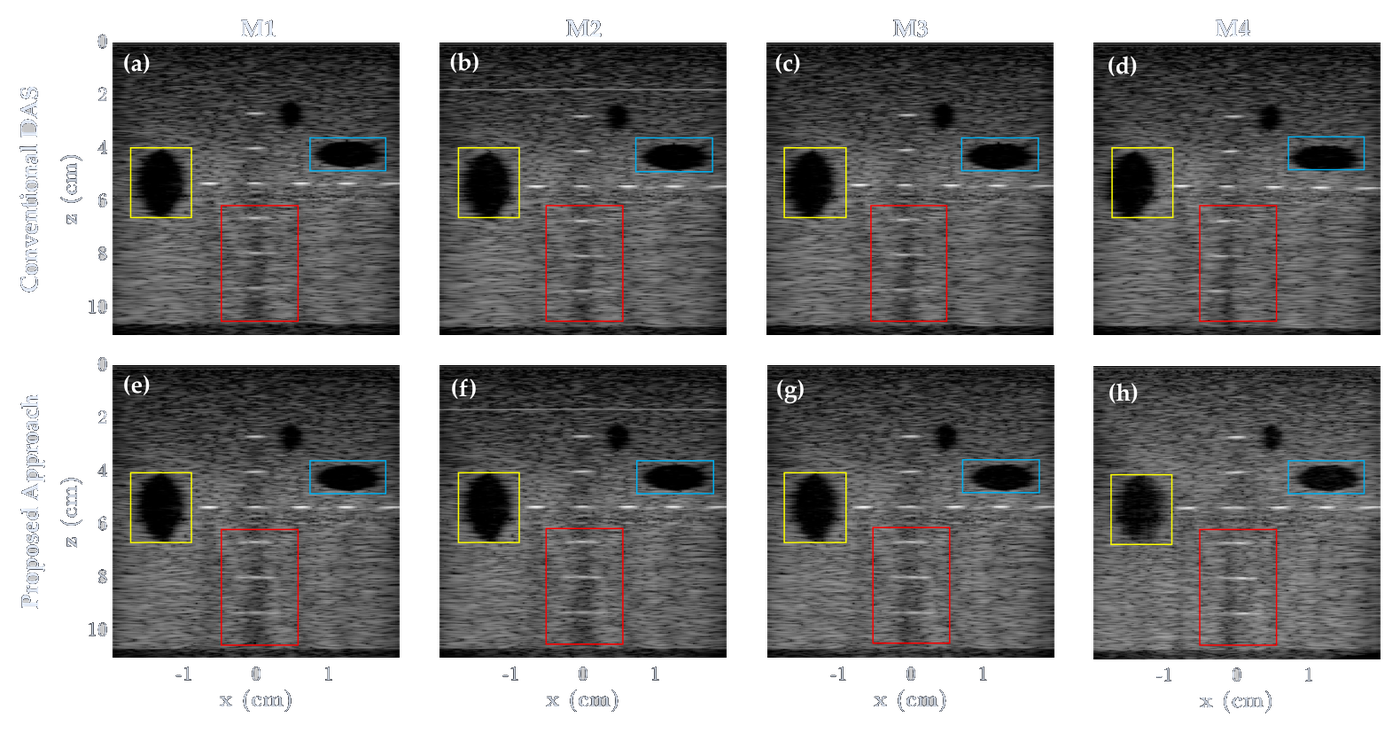
Aberration Correction
PublishedConventional delay and sum assumes a single speed of sound, i.e., 1540 m/s. A fast marching based tissue adaptive delay is computed through a speed-of-sound map, and was validated in simulated media with fat layers to about 11 cm depth.
View project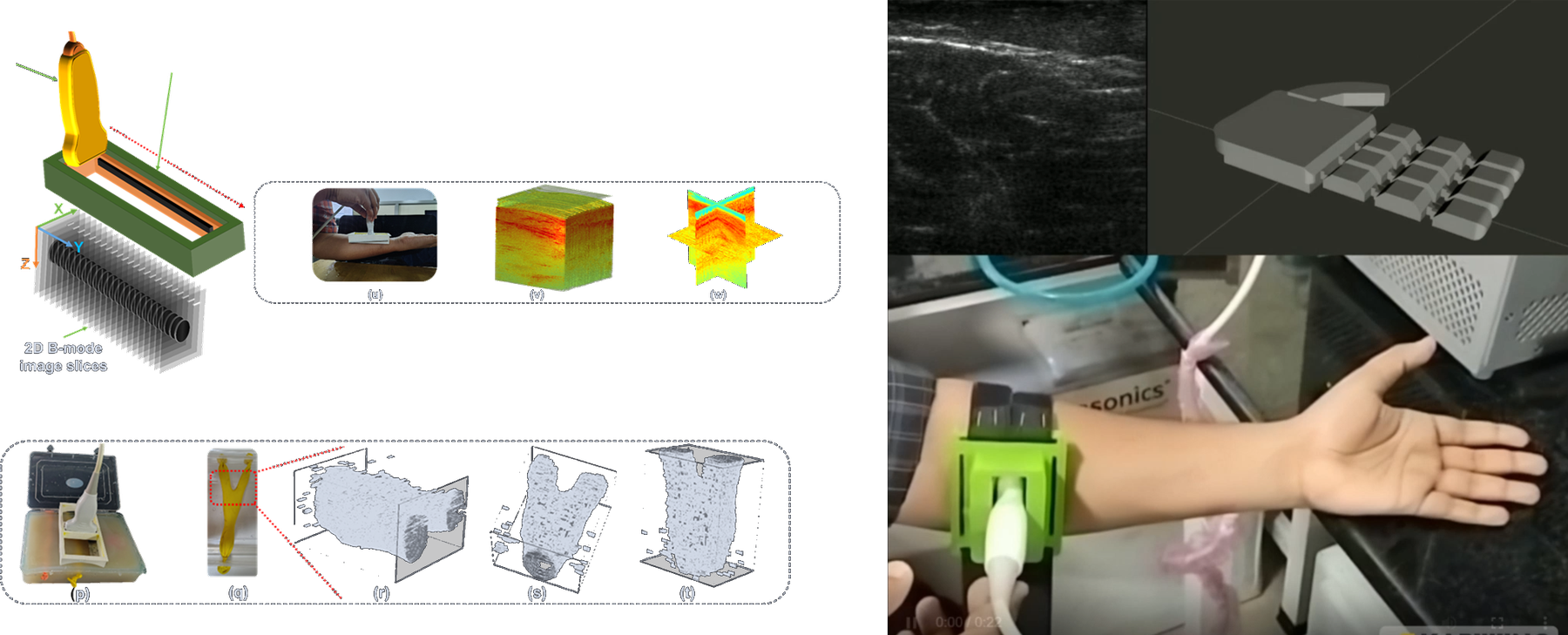
3D Image Reconstruction
OngoingTwo low-cost approaches to locate a 2D probe for 3D volumes, i.e., a 3D printed track that constrains the motion and a mask with a tilted reflector that encodes the probe position in the image. The setup costs roughly $300, against more than $1000 for position trackers (IEEE OJ-UFFC, under revision).
View project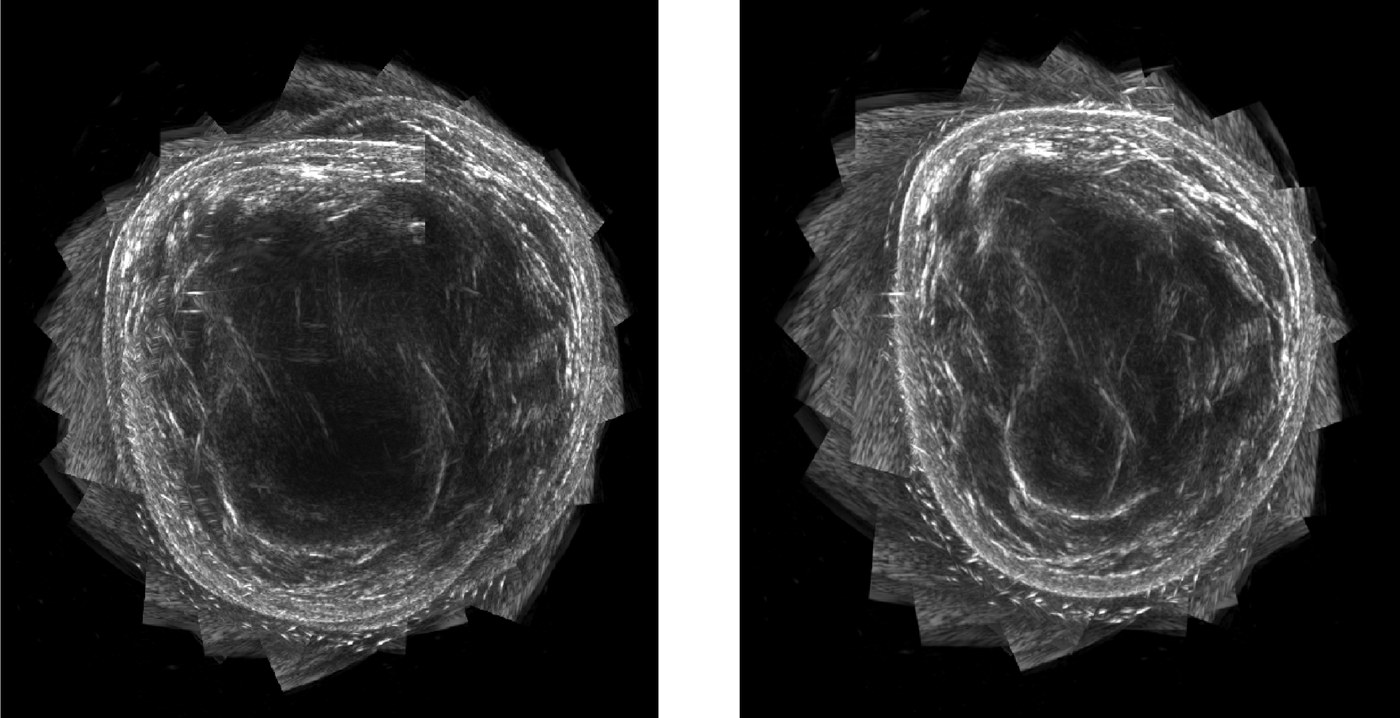
Multi-Perspective Panoramic Ultrasound
PublishedA 3D printed circular track positions a standard linear probe at 18 calibrated angles, and segmentation with optimisation-based registration stitches the views into a 360° panoramic image, demonstrated on 4 in-vivo subjects (IEEE ISBI 2024).
View project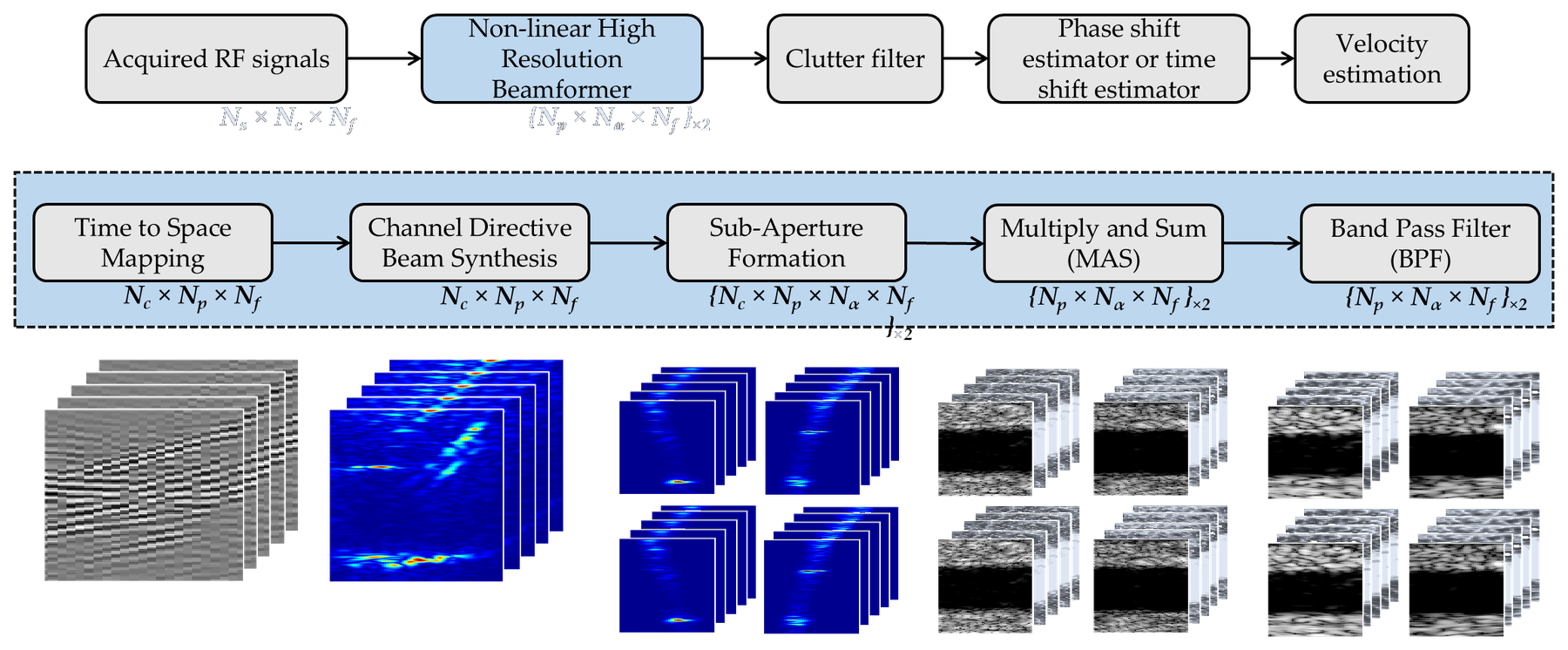
Ultrafast Flow Imaging
PublishedMost blood vessels run parallel to the skin, so the flow is transverse and conventional Doppler estimates are not reliable. Our group develops beamforming and velocity estimation methods, i.e., non-linear high resolution beamforming, fusion beamforming and triangulation based vector flow imaging, that recover the full velocity vector from non-steered plane waves.
View project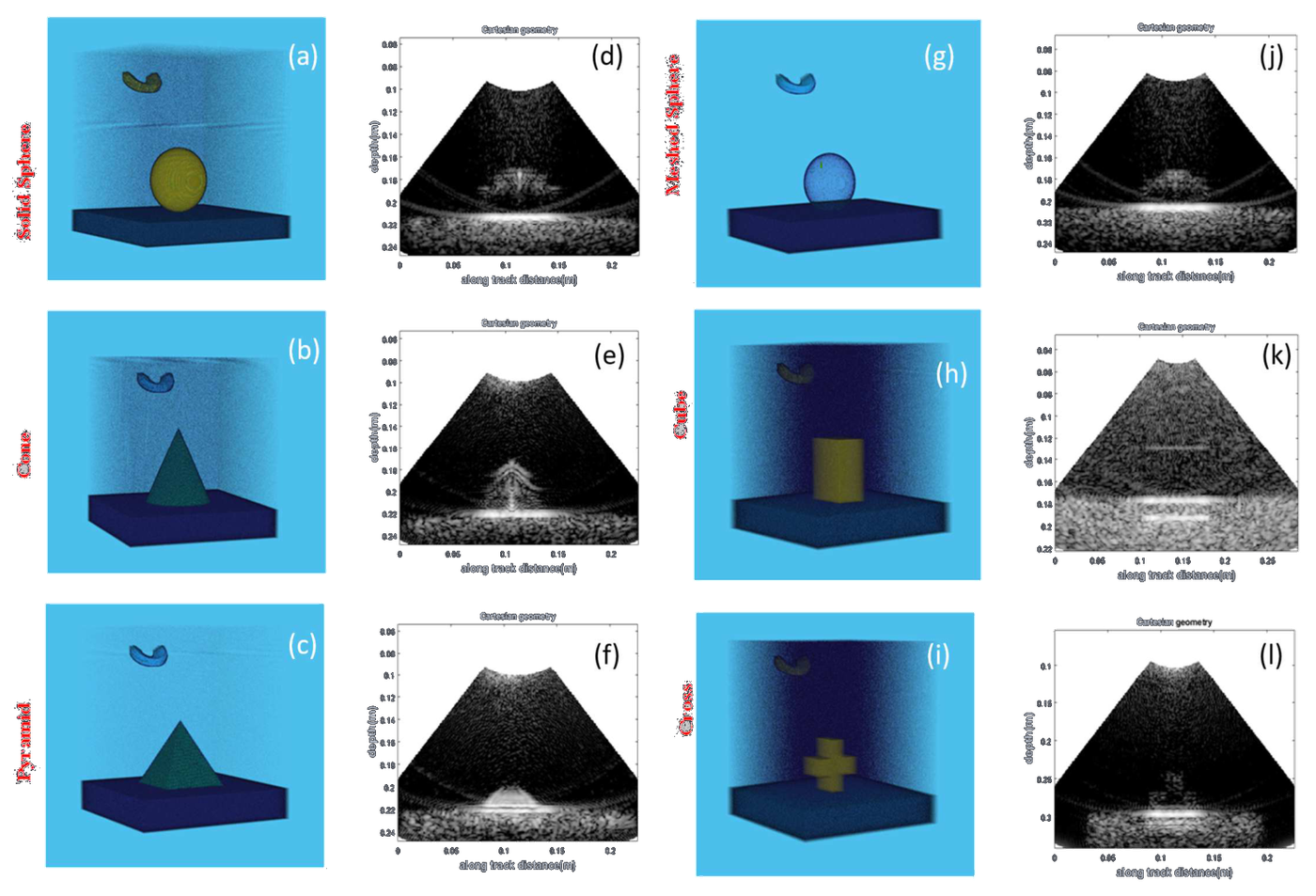
Array Signal Processing
OngoingUnderwater 3-D acoustical imaging with orthogonal linear arrays of as few as 47 elements in place of a full planar array. Our group has proposed orthogonal linear array based product beamforming for real-time volumetric imaging, and validated k-Wave target models against experimental data (JASA 2025, IEEE Sensors Letters 2025).
View projectClinical Applications
Point-of-care applications in musculoskeletal, lung, interventional, prosthetic control and vascular imaging.
Musculoskeletal Imaging
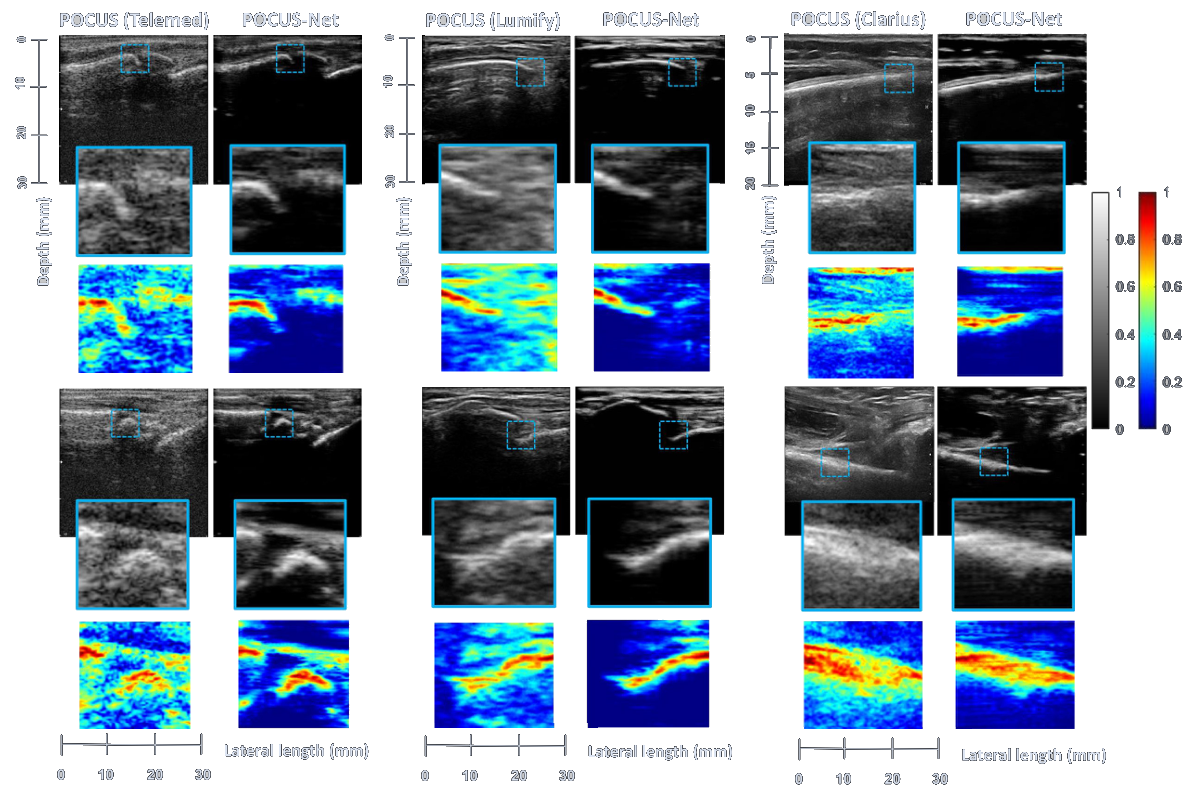
OngoingBone probability maps built from local phase, feature symmetry, acoustic shadow and integrated backscatter, and deep learning beamformers for handheld devices. POCUS-Net (IEEE TUFFC 2026) transforms delay and sum images into MVDR-quality images for paediatric bone without requiring RF data.
View project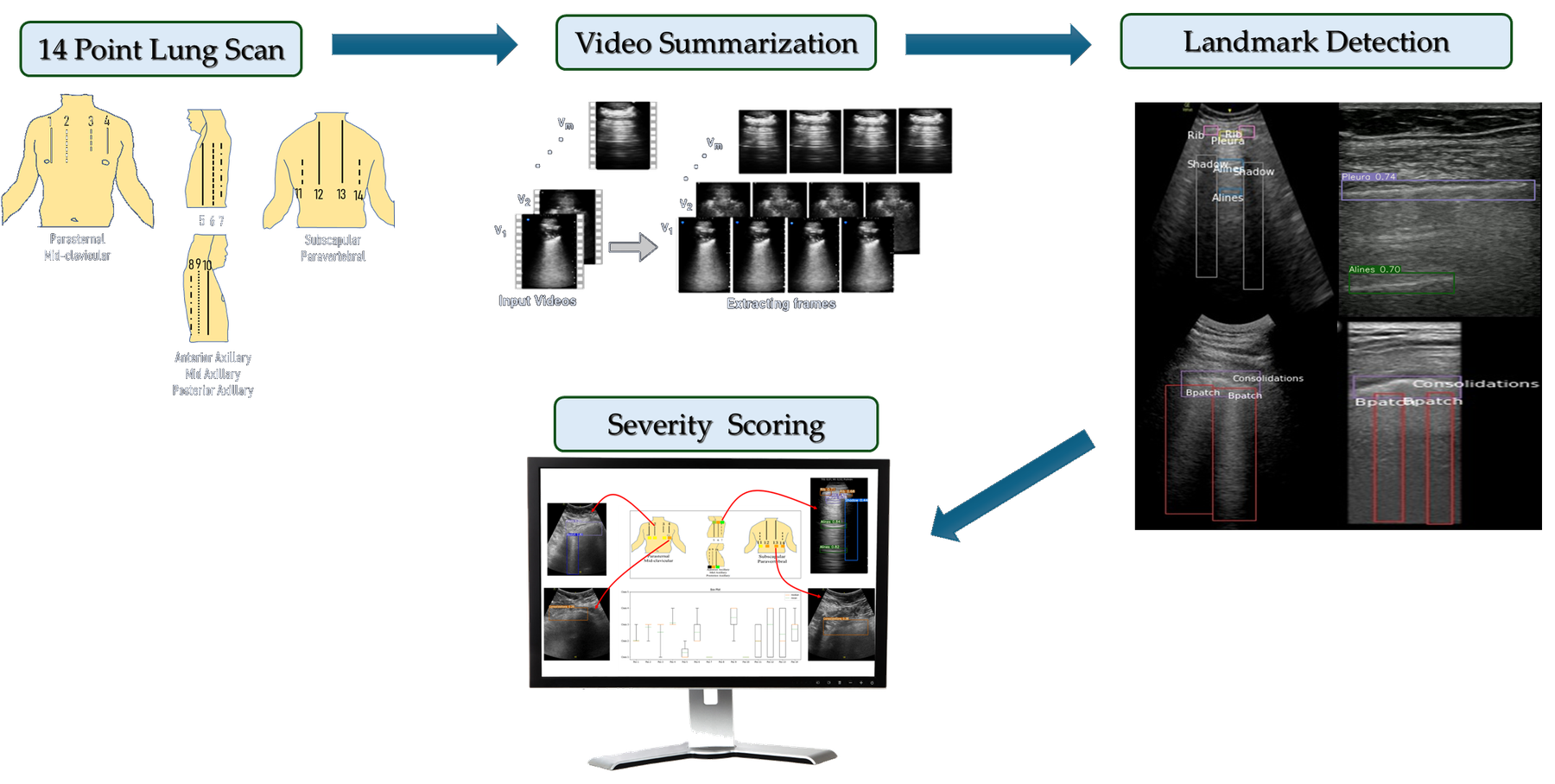
Automated Lung Ultrasound
PublishedSix systems for reading A-lines and B-lines at the point of care, i.e., landmark detection at 123 fps with a 14 MB network, A- and B-line segmentation (Dice 0.80), severity scoring and video summarization that reduces video size by 77% (Biomedical Engineering Advances 2023, IEEE JBHI 2023).
View project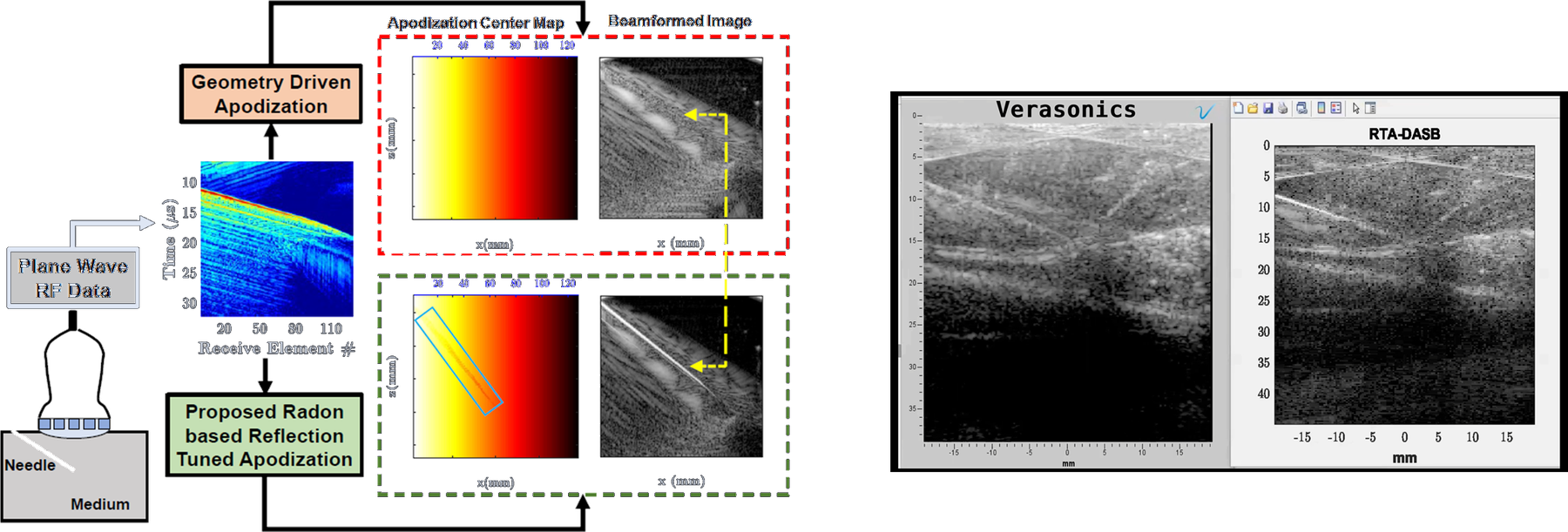
Needle Tracking
OngoingThis project studies how the choice of ultrasound transmission decides needle visibility in biopsies, nerve blocks and regional anaesthesia, and how the receive chain can be retuned to recover the needle, including reinforcement learning augmented beamforming (IEEE IUS 2025).
View project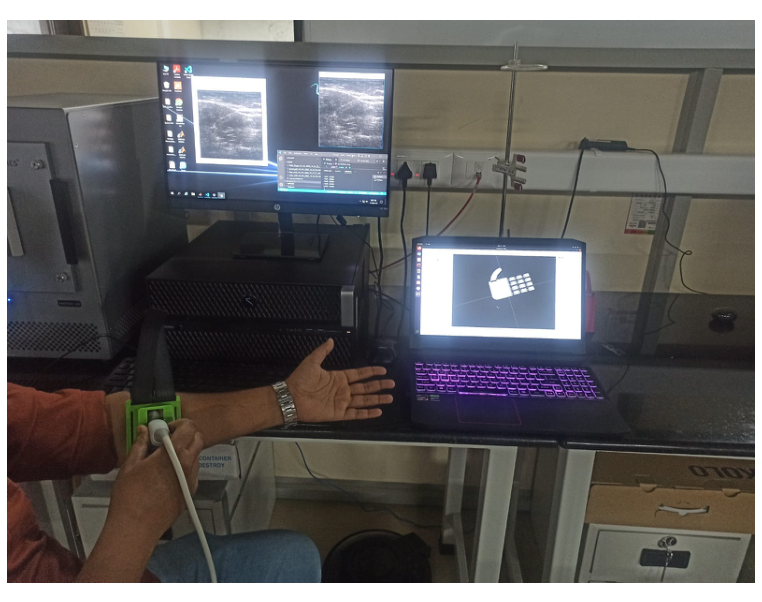
Sonomyography
PublishedHigh frame rate ultrasound imaging of the forearm captures muscle deformation, which is classified per gesture and used to drive a virtual prosthetic hand in real time, as an alternative to surface electromyography for prosthetic arm control.
View project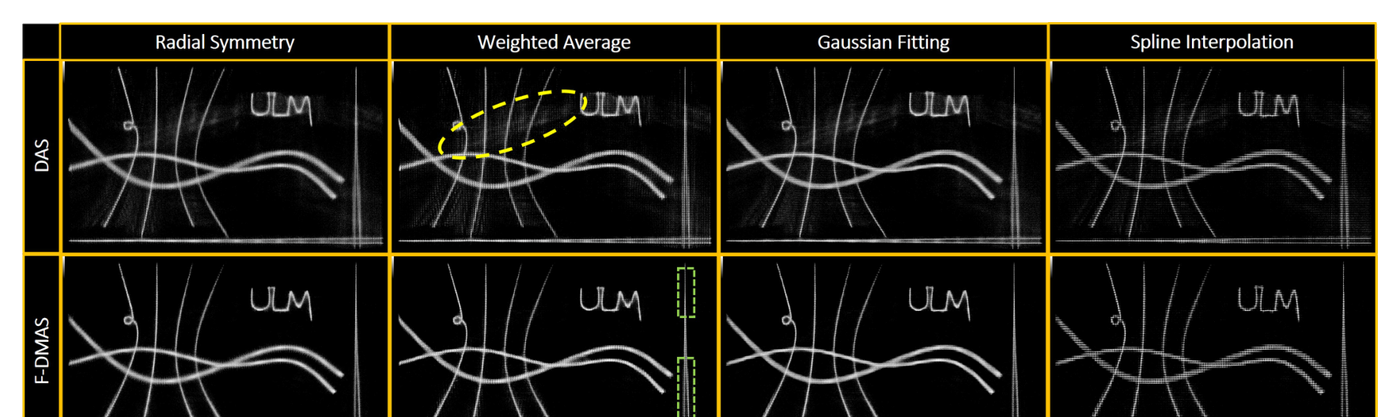
Super-Resolution Vascular Imaging
PublishedUltrasound localization microscopy localises individual microbubbles over thousands of frames to map microvasculature beyond the diffraction limit. Our group has evaluated filtered delay multiply and sum beamforming for ULM against delay and sum (preliminary results).
View projectGrants & Funding
Research supported by national and international funding agencies
| # | Project Title | Funding Agency | Amount | Duration | Role |
|---|---|---|---|---|---|
High Performance Medical Ultrasound Enabled by Advanced Piezoelectric Materials and Transducers |
RIE 2025 Manufacturing, Trade and Connectivity (MTC) Industry Alignment Fund – Pre-Positioning Programme (IAF-PP) | SGD 1,500,200 (Total Fund: SGD 9,997,000) | Jul 2026 – Jun 2029 | Team-PI | |
Portable Non-contact Breast Ultrasound Imaging |
MOE Translational R&D and Innovation Fund (TIF) Grant | SGD 550,420 | Jun 2026 – May 2028 | PI | |
Intelligent Multi-modal Fire Watcher System |
Ministry of Education (MoE) Singapore – Ignition Grant (STEM) | SGD 148,400 | Jan 2026 – Dec 2027 | PI | |
A flexible array ultrasound imaging system for hands free automatic and continuous assessment of the blood flow and tissue dynamics |
Ministry of Education (MoE) Singapore – AcRF Tier 1 | SGD 149,950 | Dec 2024 – Dec 2026 | PI |
Completed grants Earlier funded projects, from 2008
| # | Project Title | Funding Agency | Amount | Duration | Role |
|---|---|---|---|---|---|
| 1 | Intelligent Agent for ultrasound image analysis using Deep Reinforcement Learning |
MITACS Global Link Research Award | CAD 6,000 | Jan 2024 – Jun 2024 | PI |
| 2 | Learning based Beamformer for Point of Care Ultrasound Systems |
Samsung Research Institute, Bangalore | ₹12,17,760 | Aug 2023 – Mar 2024 | PI |
| 3 | Automatic Target Detection using Simulated Side Scan and Multi-beam Echo Sounder Images |
Defense Research Development Organization (DRDO), India | ₹19,65,408 | Aug 2022 – May 2024 | PI |
| 4 | Robust receive beamforming algorithm for underwater sonar imaging system for Mine Like Object Detection in the presence of reverberation |
Defense Research Development Organization (DRDO), India | ₹9,89,218 | Jul 2022 – Jun 2023 | PI |
| 5 | Cognitive Ultrasound Imaging |
NVIDIA Corporation (Hardware Grant) | USD 10,000 | Oct 2021 | PI |
| 6 | Aberration Correction for Diagnostic Ultrasound Imaging |
GE Healthcare | Internship + Compute | Jun 2022 – Jul 2023 | PI |
| 7 | Investigation of a portable, affordable, and self-guided bedside ultrasound system for tissue and blood velocity imaging |
Early Career Research (ECR) award, Science and Engineering Research Board (SERB), India | ₹49,01,830 | Mar 2019 – Jun 2022 | PI |
| 8 | An automated lung ultrasound workflow for diagnostic assistance in COVID-19 and beyond |
COVID19 Special Core Research Grant, Science and Engineering Research Board (SERB), India | ₹12,02,960 | Aug 2020 – Aug 2021 | PI |
| 9 | Automated Lung Ultrasound for COVID-19 Screening and Monitoring |
CSR Fund – Federal Bank Limited, India | ₹6,00,000 | May 2020 – Oct 2020 | PI |
| 10 | Development of a Real Time Spectral Analysis and Filtering System Based on Lyrtech SFF |
Temasek Laboratories / DSO National Labs, Defence Science and Technology Agency (DSTA),Singapore | SGD 64,000 | Sep 2008 – Sep 2009 | Co-PI |